

The Missing Middle
Friday, Apr 17, 2026
In 1980, George W.S. Trow said television had destroyed the middle distance. The Creator Economy may now be bridging it. Brands should pay attention.
Reading Time: About 15 minutes
I.
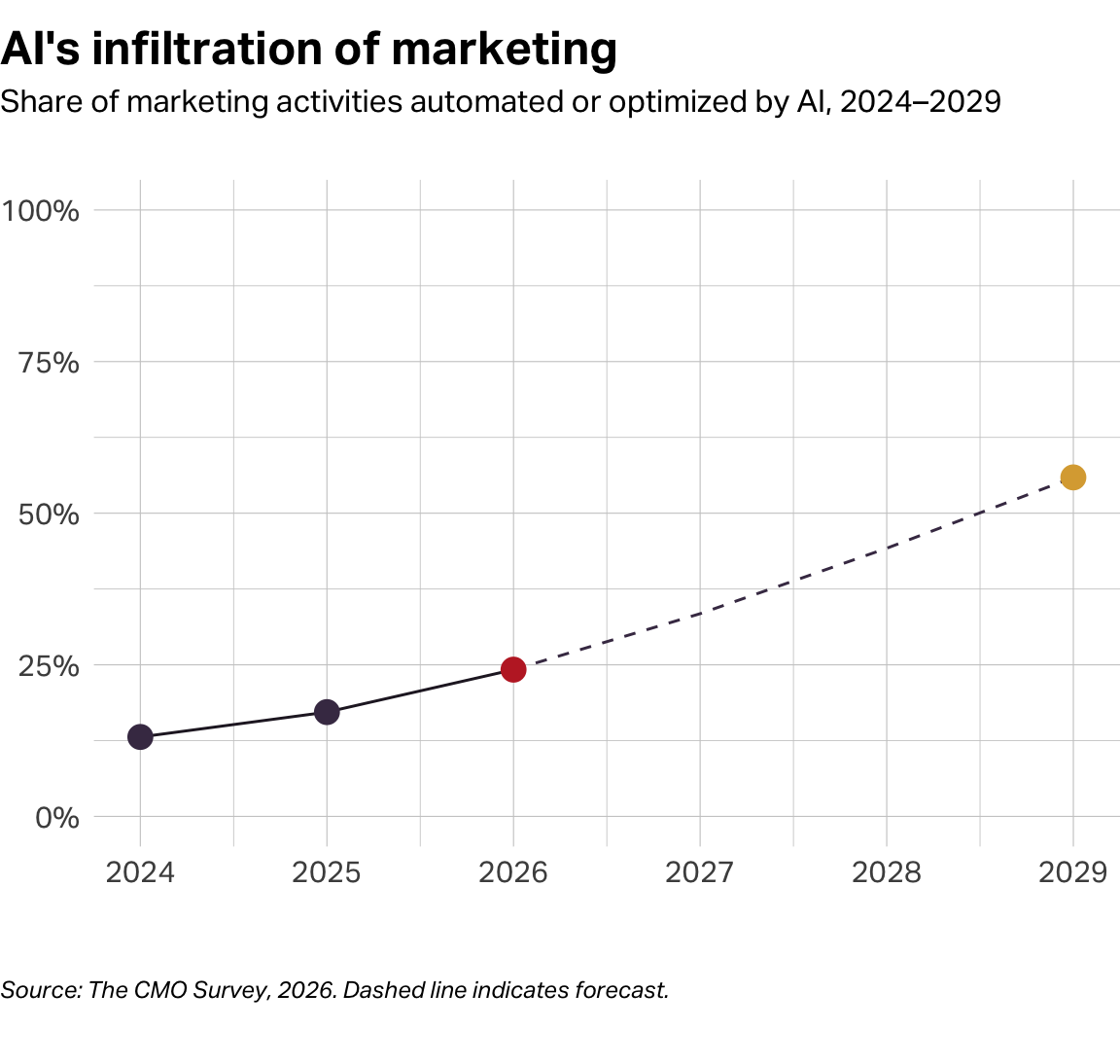
Last year, my friend Jeremy Korst co-authored a great piece for Harvard Business Review that opened with a bold prediction, “among all the managerial functions, marketing is likely to be the one that’s most disrupted by generative AI.” That turns out to be an understatement. The changes are occurring so rapidly marketing’s foundation feels like it rests on quicksand. In the most recent release of The CMO Survey, senior marketers said they were using AI to automate and optimize marketing about a quarter of the time, a 40% increase from the 2025 study. The same audience forecast that they will be using the technology for this purpose more than half the time in 3 years—representing a 131% increase in AI’s power over marketing.
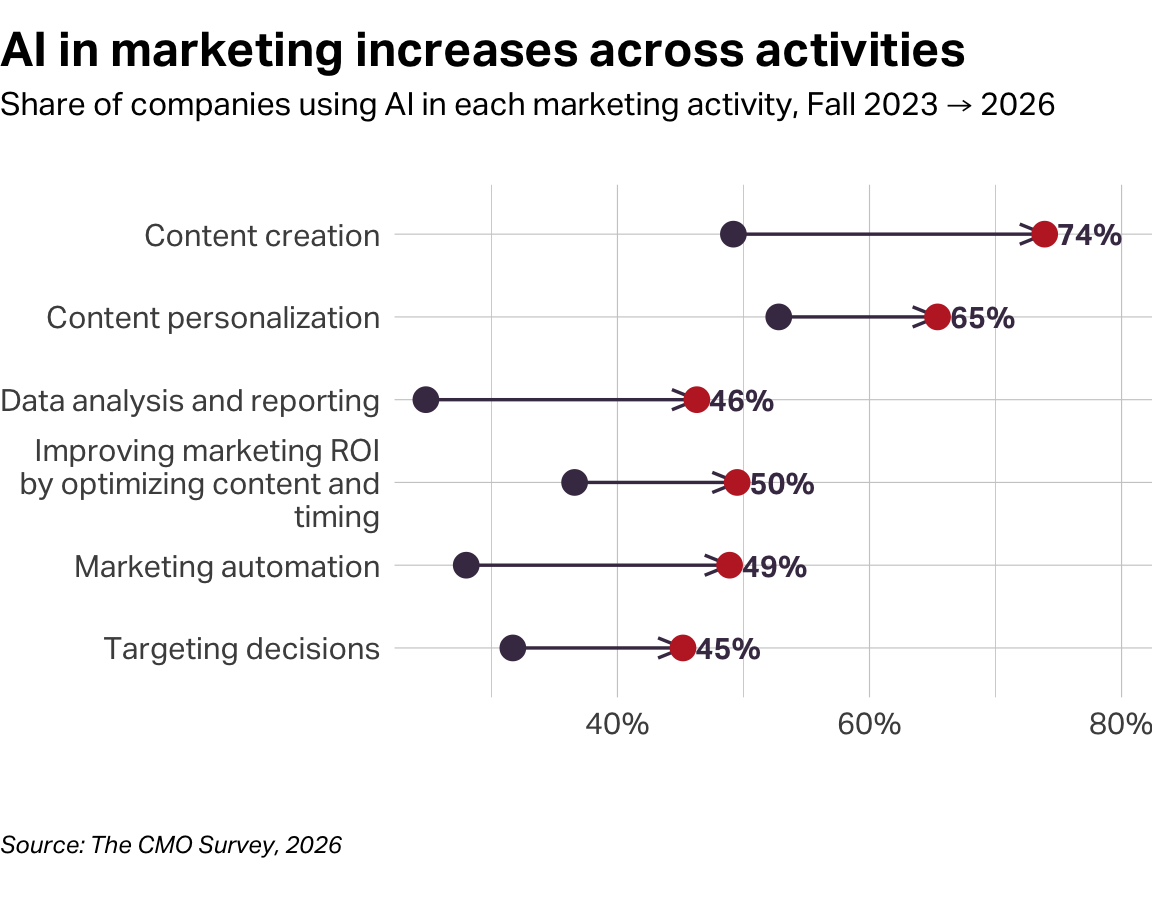
Content creation and personalization led the use cases (#1 and #2, respectively). The report suggests this increased use is leading to immediate returns. The CMOs in the sample credit AI’s implementation for generating a 14% increase in sales productivity, an 11% increase in customer satisfaction, and a nearly 15% decrease in marketing overhead costs.
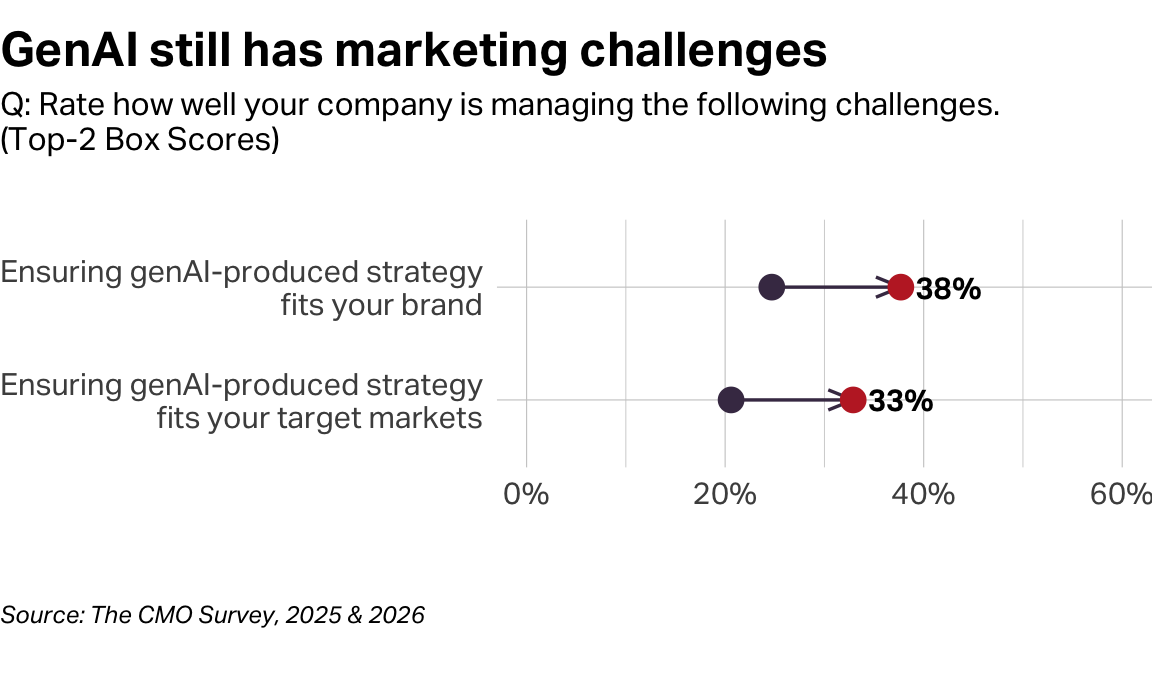
But all is not sunshine and rainbows in this new marketing reality. When asked about the challenges associated with using Generative AI in marketing, scarcely a third of those same CMOs were confident about how AI-generated content aligns with their brand strategy.
Google search trends over the past five years demonstrate growing interest in branding and brand management–a trend that is strongly correlated with an increase in hits for “AI in marketing.”
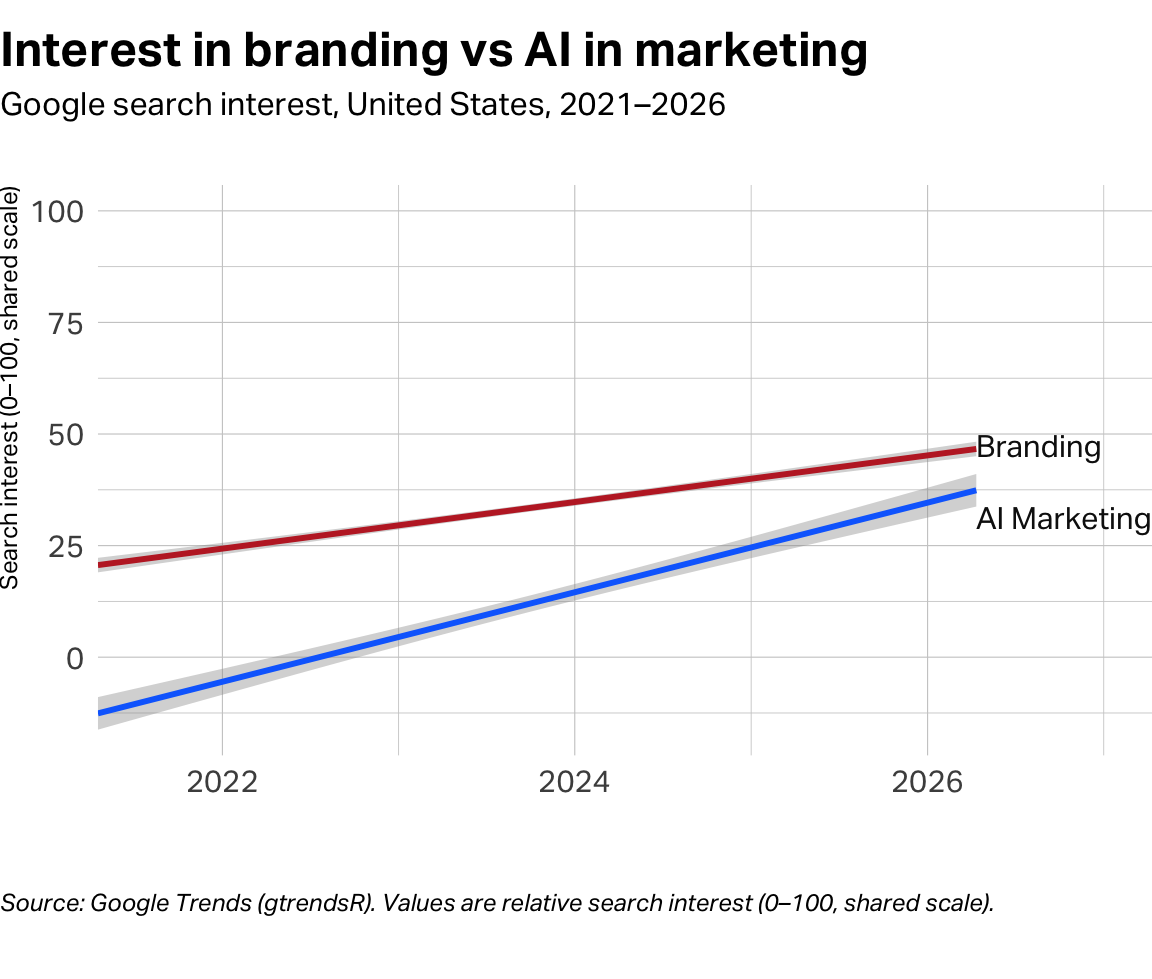
I don’t think the correlation is a coincidence. AI increases marketing productivity by streamlining the process of creating content and engaging with customers, but the problem is that an LLM is a predictive model, trained on the past behavior of many brands, including competitors. The strategies it suggests have recently been shown to be inferior because of a generic tendency the authors labelled trendslop. A generic brand is not a brand at all. As for the promise of data-driven, algorithmically-personalized brand engagement, there are many benefits to consider but there are also significant challenges that warrant caution.
In 1998, Susan Fournier published a seminal piece of brand wisdom in the Journal of Consumer Research. She argued that consumers do more than consume brands. They form relationships with them that follow the same psychological rules as the ones we apply to people in our lives. It’s why some brands are perceived as a best friend, a long-term partner, a trusted coach, or a one-night stand.
When AI drives that relationship, it can generate intimate dialogues that simulate empathy and warmth, creating feelings of satisfaction and trust. But these atomic, individualized experiences might also dilute the collective power of the brand. Fournier’s theory considered brand relationships as social constructs that were shaped by what the brand means to others around you as much as what it means to you, personally.
Writing in the Harvard Business Review, Douglas Holt made this social dimension explicit. He found that brands “succeed because they forge a deep connection with the culture. In essence, they compete for culture share.” What makes a brand powerful is the fact that the stories become conventional, treated as facts in everyday life, reinforced continuously through social interaction. A brand is not what a company says it is. It is what a community believes it is.
Applying Holt’s logic, AI personalization can undermine this culture. It withdraws the brand from the social circulation that is the source of its power, optimizing for one author (the company) and one relationship (the individual consumer). The feedback loop becomes tighter, more precise, and more isolated. In data science, we would say that the model is “over-fit.”
On the other side of this very intimate, AI-generated brand experience, companies have been removing cultural vernacular for reasons that are baffling. A widely circulated quilt of fashion and luxury logos demonstrated a trend towards less distinction. The trend has a name—blanding.
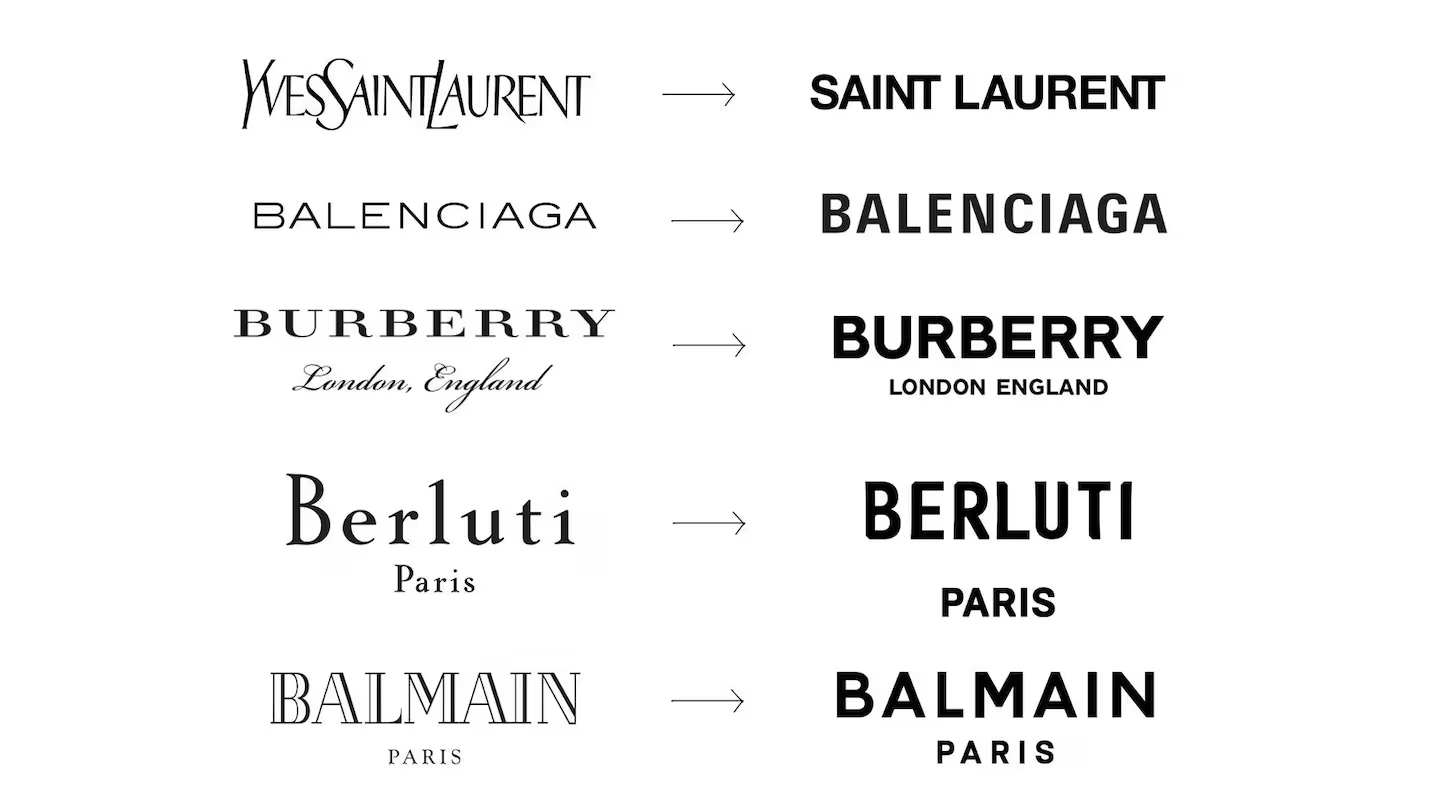
Source: The Business of Fashion
Taken together, this regression to a visual mean allows companies latitude to be anything to anyone rather than something to a specific group. It also results in an absence of cultural context. Without context, brands lose a lot of their market power. We end up in a world where there is the brand (capital B) and my brand, and little in between. We have been here before.
II.
On an overcast day in November, 2006, a 63 year-old American expat living in Naples, Italy quietly passed away, alone in his third-floor apartment. It would be several days before his body was discovered.
His neighbors knew very little about him, a fact that it seems he encouraged. He was known to the regulars at a local trattoria as Signor Churchill. It’s unclear if he created this alias for himself or if it was chosen for him given his receding hairline and round face. All they could remember about him was that he spent most mornings there, reading the International Herald Tribune.
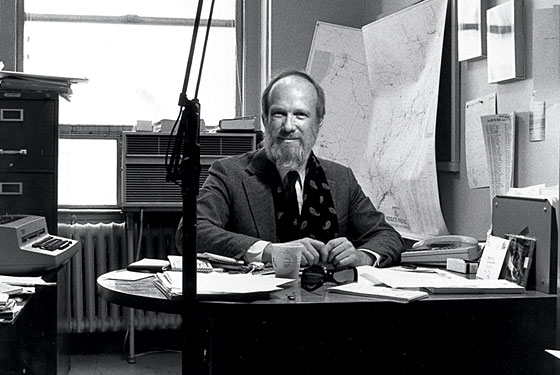
What they didn’t know was that the man was George W.S. Trow, a culture critic who was best known for a scathing assessment of American life that became one of the most talked-about pieces The New Yorker had ever published.
A Harvard-educated writer who spent thirty years on staff at The New Yorker, Trow earned a devoted following among the kind of reader who appreciated when the jokes were also arguments. His most famous joke/argument appeared on November 17, 1980 in a rare instance when the magazine’s entire central section was given over to a single piece of writing. “Within the Context of No Context” announced itself as something stranger than a conventional piece of criticism. It was a kind of prose poem about how television disintegrated “the middle distance” from American life.
He was not the first to turn a critic’s eye to television’s growing influence. A decade and a half earlier, the Canadian media theorist Marshall McLuhan dedicated an entire book to the medium. But his analysis in Understanding Media suggested that television was re-tribalizing society, restoring a communal electricity that print culture had extinguished. He popularized the promise of a “Global Village.”
That was not how Trow saw it. He argued that the tribes and the villages were disappearing because television eviscerated the civic and communal infrastructure that had given American life its rich texture. This infrastructure included the bowling leagues, the women’s clubs, and other neighborhood institutions that drew us together on a more manageable scale. “The middle distance fell away,” he wrote, “so the grids (from small to large) that had supported the middle distance fell into disuse and ceased to be understandable.”
And then, the main indictment:
Two grids remained. The grid of two hundred million and the grid of intimacy. Everything else fell into disuse. There was a national life—a shimmer of national life—and intimate life. The distance between these two grids was very great. The distance was very frightening. People did not want to measure it. People began to lose a sense of what distance was and of what the usefulness of distance might be.
The bleakness of the piece may explain why it has not endured the way McLuhan’s optimistic vision of a Global Village has. In an obituary for Trow, screenwriter and novelist Michael Tolkin observed that the piece was “not a polemic for change. It’s just a cold description of where things are going.”
At its core, “Within the Context of No Context” might be considered a premonition for our present epidemic of loneliness and its ties to screen-life. Trow blamed television, but television was just the first screen to lead us astray.
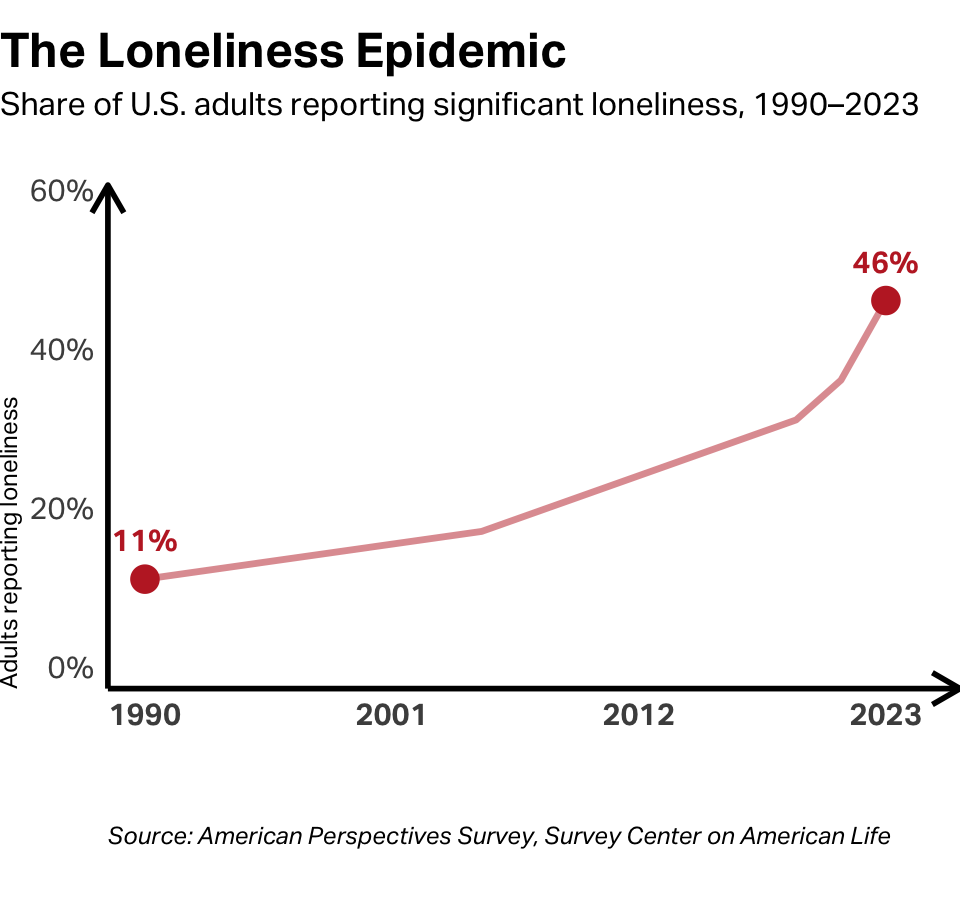
Today, screens are everywhere. Walk down any street and you will likely find someone looking down at a device instead of ahead to where they’re going. In my classrooms I find myself increasingly teaching to a sea of Apple and Dell logos.
The media industry has endlessly debated whether content or distribution is king, but it may be time for context to lay a claim to the throne. The case for it has been building in the 20 years since Trow died, which was the same year that Google purchased YouTube. A new grid is bridging the distance between the grid of one and the grid of millions. Whatever its limitations, YouTube attracts more viewers every day than all of the established television networks Trow indicted combined. If it is re-establishing the middle distance it is because it truly delivers a benefit Trow claimed television faked. Millions of YouTube users feel they belong to something.
III.
Human beings need to belong. It is a biological imperative. In 1995, Roy Baumeister and Mark Leary published a paper in Psychological Bulletin that proposed that belonging is as fundamental to human functioning as food or shelter. Its absence causes measurable harm and its presence is required for psychological health, physical wellbeing, and optimal cognitive function.
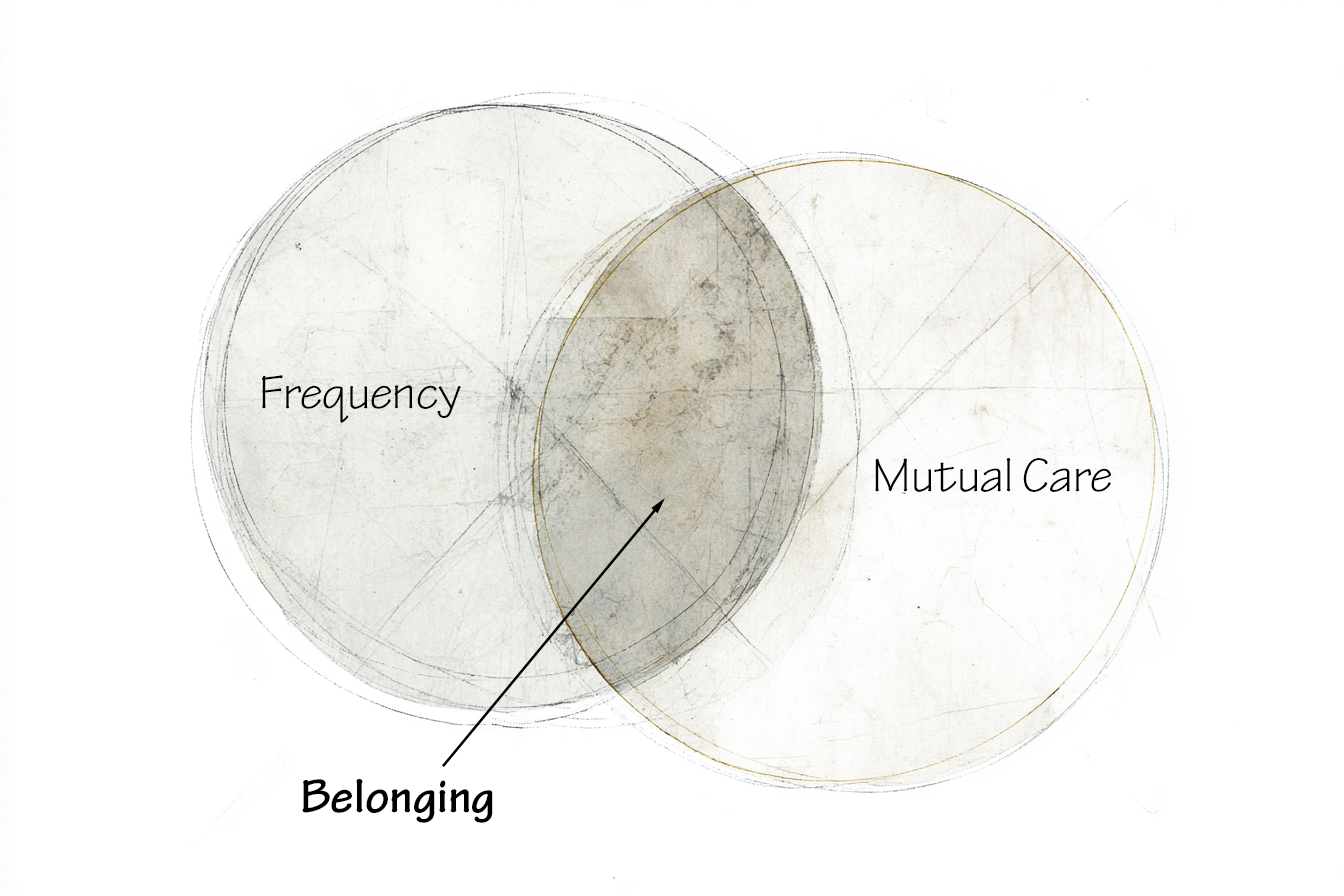
The “need to belong theory” identified two conditions that must both be present for the need to be satisfied. First, belonging requires frequent personal contact with others. Second, interactions must take place within relationships characterized by stability and mutual care. Neither condition alone is sufficient. You can have frequent contact with others but belonging won’t surface if the parties don’t exercise reciprocal care. A single interaction of mutual regard won’t deliver it either. The need is only met when both are present, consistently, over time.
This is what Trow’s disappearing middle distance provided. The old civic infrastructure of American life was belonging’s infrastructure. Television offered a close substitute, but it served empty calories. We didn’t really know the cast of Cheers, but we felt like we did. They were in our lives every Thursday night but Norm and the gang had no idea who we were.
Sociologists Donald Horton and Richard Wohl named this phenomenon in 1956. They called it a Para-Social relationship—a genuine emotional bond formed between an audience member and a media figure they will never meet. When it was published, the psychological community couldn’t decide if it was just a curiosity or a genuine pathology. That changed when the internet transformed the way we publish and consume media. Across our various social networks we actually could interact with famous figures. More than that, we could ourselves become a media figure. We saw others do it. The power felt within our reach. This was the fuel that unleashed The Creator Economy, and in it is a lesson for brands navigating the AI era.
IV.
Jawed Karim has the distinction of posting the world’s first YouTube video. Titled “Me at the zoo,” and running just eighteen seconds long, it shows footage of a young man in front of some elephants, talking to no one in particular.
Karim was not only the platform’s first user, he was one of its co-founders. He, Chad Hurley and Steve Chen started working on the concept in February, 2005. On April 23rd the elephants were up. By the end of that year, the platform averaged 8 million views a day. When it was acquired by Google the next year for $1.65 billion, it was averaging over 100 million.
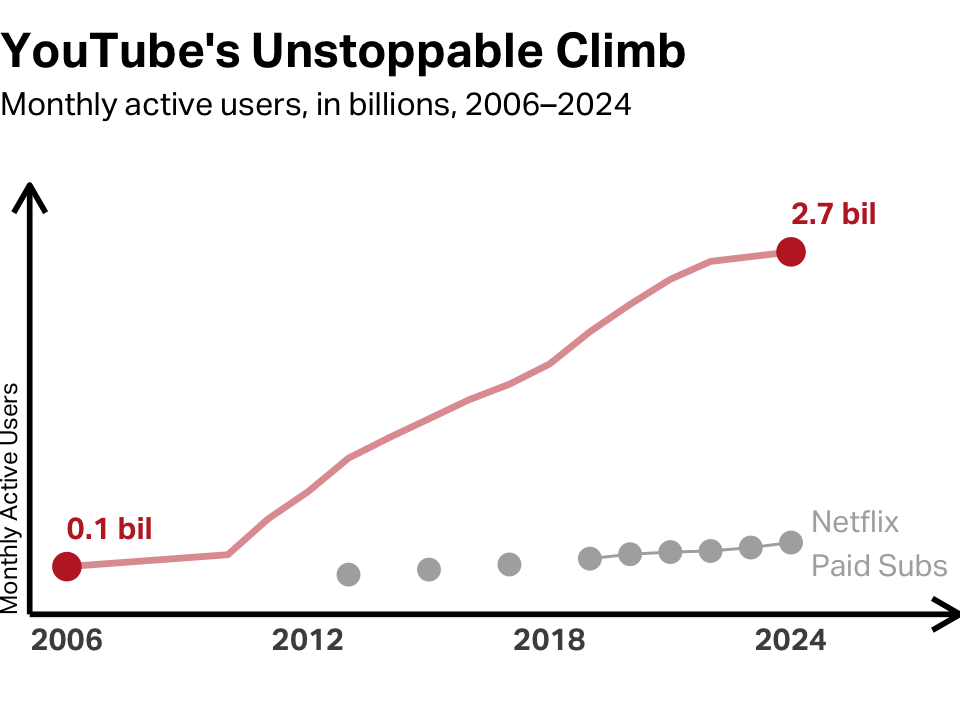
Nobody took YouTube very seriously at first. Its early content was a hodgepodge of cat videos, pranks, kids doing things they shouldn’t, and people ranting about celebrities. Videos were capped at ten minutes and they couldn’t be monetized. Mr. Beast was still in second grade. Clavicular was an infant. It would be another three years before Lucas Cruikshank became the first YouTuber to reach 1 million subscribers for his channel Fred. Hollywood only took notice because of concerns about copyright infringement. It was not remotely considered a competitive threat.
If we had to pick a date for the beginning of the creator economy, we might nod to an evening the next year when two brothers began using the platform as a way to keep in touch. John and Hank Green lived more than a thousand miles away from each other. “We didn’t ever talk, really,” Hank said in an interview years later. “I believed without question that this was a valuable thing because my older brother liked it.” The “thing” was Brotherhood 2.0, an experiment in which the brothers agreed to avoid text-based communication and instead send each other self-recorded videos on YouTube.
YouTube is a media outlet in the same way that a cable channel is, but it has a feature the latter does not. It’s participatory. Viewers can comment on what they see. They can interact with the content creators. They can gather together and have a conversation from anywhere, and that conversation can include the creators and influence the content. This is why YouTube is also truly social media.
The Green Brothers unlocked just how important this distinction would prove to be because, while their videos were directed at each other, they were watched and commented on by a legion of fans. Hank described it this way:
We were never really shouting into the void. There were always people following us. Even if it was just a couple dozen people, they were really engaged.
They ended their Brotherhood 2.0 project on December 31, 2007, but a new community was born that persists to this day—Nerdfighters. Their VlogBrothers channel has over 4 million subscribers today. All the success inspired them to try something even more daring. In 2010 they co-created VidCon, the world’s largest conference about online video. 1,400 people attended the first VidCon in Anaheim, CA. Today, it attracts more than 85,000.
The Greens are among YouTube’s most influential celebrities. John’s fourth novel, The Fault in Our Stars, catapulted him to the status of a generational voice. It topped the New York Times bestseller list for 78 consecutive weeks and sold more than 23 million copies worldwide. While beautifully written, its phenomenal success was also due in part to the strength of the Greens’ YouTube community.
The Greens rebuilt the middle distance that Trow had written off for dead. They exist on YouTube’s grid of millions and on the deeply personal grid of the self. But they also created a vibrant middle layer where people feel they are seen and belong.
V.
Brands have not ignored the creator economy, but they were late to the party. Now they’re scrambling to align with it. Influencer marketing is a $24 billion industry. Brands collaborate with creators on sponsored content, limited product lines, and co-branded campaigns. Meanwhile, many creators are creating brands of their own, with products and companies that they promote on their own media empires.
Yet brands have not learned the real lesson of the creator economy. They treat it as just another channel, rather than as a roadmap for competitive advantage in the era of AI.
Brand communities are not sycophantic, the way that AI is. If an LLM is providing your brand with the emotional connection that delights your consumer, rest assured that it can be copied. But it is a daunting task to duplicate the authenticity of a brand community, and what it feels like to belong to one. Brand communities are living entities that are as unpredictable as the humans who form them. They do irrational things like inventing their own languages.
Nerdfighters share a vocabulary that serves no other purpose than uniting those who belong. They say DFTBA (Don’t forget to be awesome), worldsuck, and French the llama (an exclamation of surprise). It’s unlikely a large language model would create these expressions or make them land they way they do because an LLM is rational and exists exactly because of its powers of prediction. A brand benefits from all of these facets of community. Is it even a brand if they are absent? The greatest brand-builders in American business history have understood all of this intuitively, long before YouTube.
Herb Kelleher built Southwest Airlines on the conviction that if you hired people who genuinely loved other people, the culture would take care of itself. The planes were just a forum for the community to gather. I recall flying Southwest in the 90s when there were still party seats (rows that faced each other). It was awkward but it was also a shared experience few forgot. You had to be there. Southwest’s most loyal fliers told stories about flight attendants who sang the safety announcement and gate agents who remembered their names. While it was one of the last major airlines to launch a formal loyalty program, when it did it was uniquely Southwest and decidedly egalitarian. This was a brand sustained by a culture of belonging.
Leslie Blodgett built Bare Minerals into a multi-billion-dollar brand by doing something almost no cosmetics CEO ever did. She regularly met up with customers in their homes and gathering places to play with makeup together. She genuinely loved the women who wore her products. When she started selling them on QVC, it was a natural extension of the conversation she was having daily with people who belonged to a culture of “bare beauty.”
In a very different way, Steve Jobs understood that Apple was selling membership in a community that believed technology could be beautiful, that design mattered, and that the people who made things differently were the ones who changed the world. Youngme Moon, in her book Different described this kind of strategy as hostile branding. “Hostile brands don’t market in the classical sense of the term,” she wrote, “they anti-market.”
There is an Apple way of doing things. No other way is tolerated. Think Different was a belonging proposition as much as an advertising slogan. It told a specific kind of person that you are one of us. For the rest it said, “maybe we’re not for you.” Apple’s share of the personal computing marketplace was once well below 5%, and Microsoft users regularly mocked Apple users. Yet Apple users doubled down. That is what belonging does. It creates stickiness. It also evangelizes people.
The creator economy is just the latest reincarnation of this very human need to belong. And this is what AI-driven personalization, for all its precision, struggles to replicate. It’s why brand managers have reason to be cautious about how much they let AI drive branding decisions.
I’m not a Luddite and this is not the preamble to an anti-AI manifesto. In fact, I think AI has the power to help managers elevate brands, but I don’t think it will come through hyper-personalization and faux relationships with AI chatbots. Rather, if AI plays a role in brand-building it will be from the insights it can help managers develop and the time it can give them to re-engage directly with their customers and foster the communities that create that powerful sense of belonging that separates legendary brands from ordinary ones. Let the technology run the mundane tasks while the humans reconvene in the spaces where meaning is co-created and shared. This was the lost middle distance Trow wrote about more than four decades ago. It can be reclaimed.